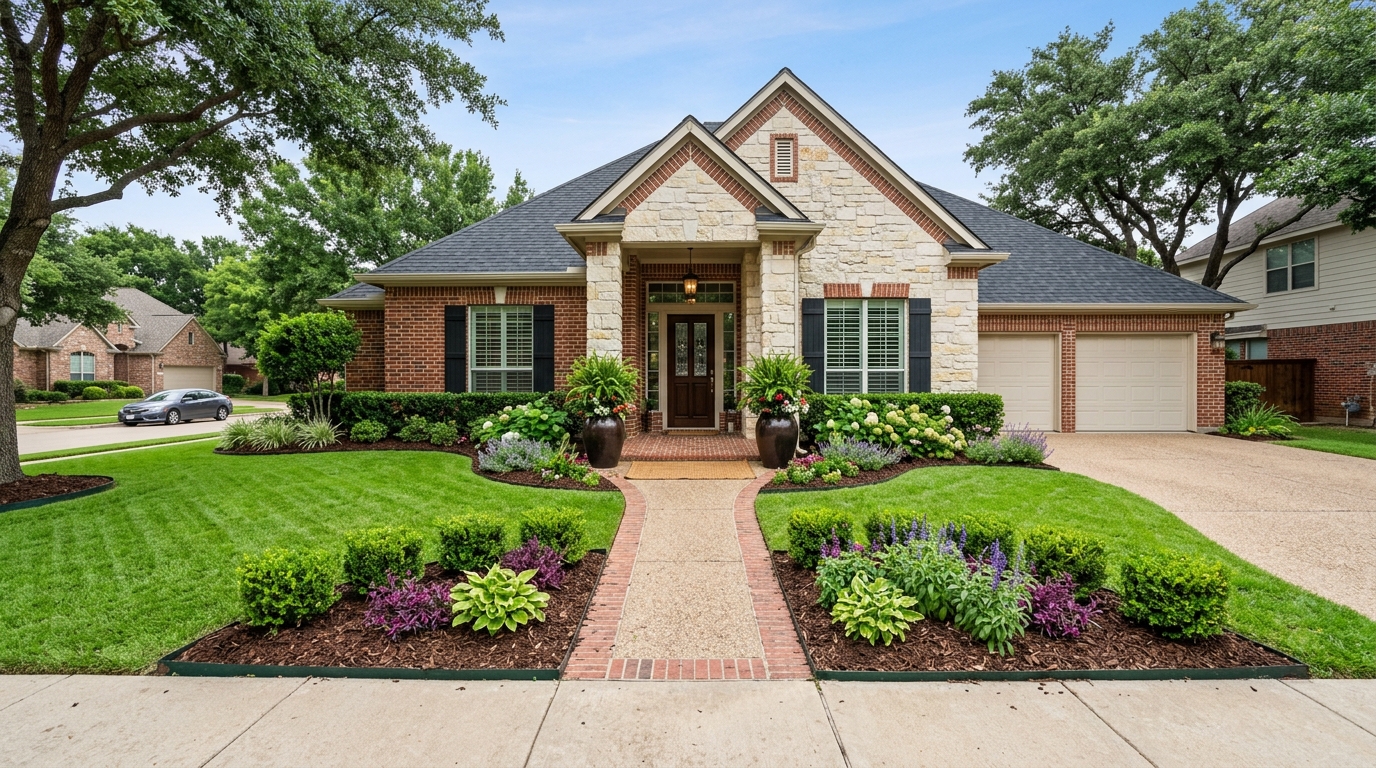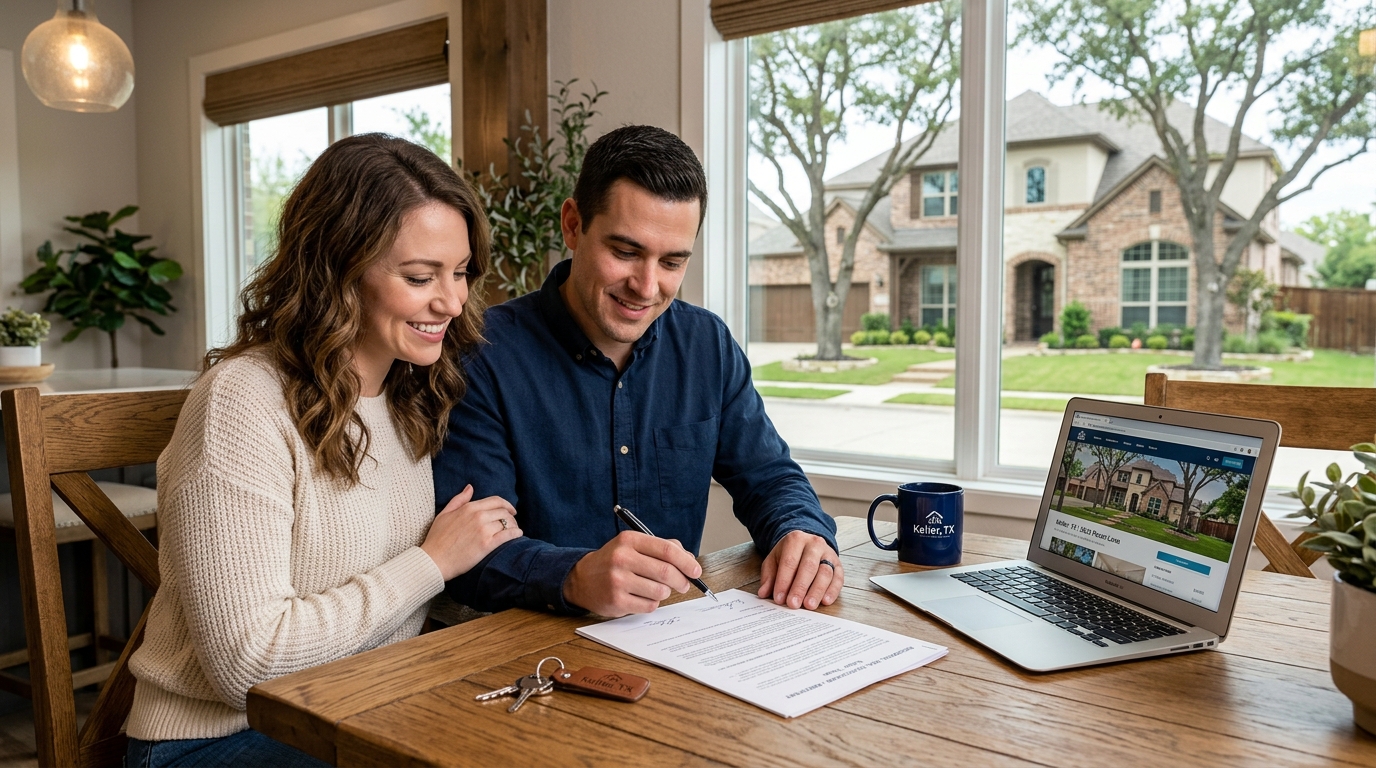
You've found it. That perfect property in Keller that makes you envision future dinners on the patio, kids playing in the yard, quiet mornings on the porch. After months of searching, this is the home you want. Now comes the critical moment that separates dream-buying from smart buying: crafting an offer that wins the house without putting you in a financial chokehold.
Making an offer is one of the most emotionally charged parts of buying a home. Your heart says "offer whatever it takes," but your head needs to win this conversation. I've worked with countless buyers who fell in love with a property, and the ones who succeeded were those who approached their offer with data, strategy, and a clear understanding of their limits.
Start With Comparable Sales, Not the List Price
Here's where most buyers stumble. You see a home listed at $575,000 and think that's the reference point. It's not. The list price is what the seller hopes for, not what the home is actually worth.
The real value comes from comparable sales — homes like the one you're making an offer on that sold recently in your neighborhood. In Keller right now, homes are selling relatively quickly, with properties going pending in around 14 days. This means there's good market data available. When I help buyers, I pull 3 to 6 recent sales within similar neighborhoods, looking at homes with comparable square footage, bedroom count, condition, and age. Then I calculate the median price per square foot and multiply it by the subject home's living area. That's your market value foundation.
Let's say you're looking at a home listed for $575,000. Your comps show similar homes sold for an average of $560,000. That $15,000 gap between list and recent sales tells you something important about the market right now. This data becomes your negotiating anchor. When you offer $560,000 and explain why (citing the specific comparable sales), the seller receives a defensible number, not an arbitrary lowball.
Data-backed offers get serious counteroffers. Arbitrary numbers get rejected or ignored.
Factor in How Long the Home Has Been Listed
Days on market is leverage, and it matters more than people realize. A home that's been listed for 7 days signals strong buyer interest. A home that's been sitting for 90 days signals something different — either it's overpriced, needs work, or the market simply hasn't favored it.
For fresh listings in Keller's current balanced market, consider offering close to asking or perhaps 1-3% below if your comps support it. The seller hasn't yet felt pressure, and they're likely to receive multiple inquiries. In this scenario, bringing a strong offer early matters.
For homes that have been listed 30 to 60 days with one or more price reductions, that's a different story. The seller has already signaled willingness to negotiate. You can start 3-7% below the current asking price and have a reasonable conversation.
Adjust for Condition and Repairs
A home's condition directly impacts what you should offer. The comps you pulled are your starting point, but this specific house may need adjustments — either up or down.
If the home is move-in ready and better updated than your comparable sales, add a little to your value estimate. If it needs cosmetic work, subtract what realistic repairs would cost. For more serious issues — a roof at the end of its life, outdated electrical, or structural concerns — you might subtract 5-10% from asking, and you should have contractor estimates to back that up.
I once worked with a buyer on a beautiful home in Keller that had recent flooring, fresh paint, and updated kitchen. The comps supported the list price, but because this home was in notably better condition than the recent sales, offering at asking made sense. It did. The buyer won the house, and that extra care in the condition assessment gave them confidence they were paying fair value.
Understand Your Market Position Right Now
Keller's market has shifted this year. Homes are selling, inventory is available, and buyers have more negotiating power than they had 12 months ago. This isn't a hot seller's market where every home gets multiple offers and bidding wars are common. It's more balanced.
In a balanced market like Keller's, your offer strategy depends on how much you want the specific property. If this home checks all your boxes and you can't imagine losing it, offering at or near asking makes sense. If you like it but would keep looking if the price isn't right, try 2-5% below asking and see if the seller counters. Be prepared to negotiate toward the middle.
However, if you're competing against multiple offers, the dynamics change. In those situations, you need to think beyond just price. More on that next.
The Power of Terms Beyond Price
Price doesn't tell the whole story. In fact, terms like contingencies, closing timelines, and earnest money deposits can equal $1,000 to $10,000 in value.
Consider your earnest money deposit. The standard is 1-3% of the purchase price. In a competitive situation, bumping this to 2-3% signals serious intent. You're putting more cash on the line, which tells the seller you're a real buyer. On a $500,000 home, that could mean the difference between a $5,000 deposit and a $15,000 deposit. That matters.
Closing timeline flexibility is free leverage. Ask yourself: does the seller need a quick close or extra time to find their next home? If they need 60 days and you can offer 60 days, say so. If they want to move in 30 days and you're flexible, accommodate it. Matching the seller's preferred timeline can matter as much as your price.
In multiple-offer situations, consider an escalation clause. This automatically increases your offer to beat competing bids up to a maximum price you set. For example: "Buyer offers $560,000 and will exceed any competing offer by $2,000 increments, up to a maximum of $575,000." You stay competitive without blindly overbidding, and you can require the seller to show proof of competing offers.
Set Your Walk-Away Number Before You Make an Offer
Before you write anything down, determine your maximum offer price. This is the absolute most you'll pay regardless of competition, condition, or emotional attachment. Write it down. Share it with me (your real estate agent). Stick to it. This single discipline prevents the heartbreak and financial strain that comes from chasing a property beyond reason.
I had a buyer last year who fell in love with a Keller home and kept exceeding their budget with each counter. They won the home at $18,000 over their walk-away number, then the appraisal came in below their offer price. They had to cover the gap out of pocket. A clear maximum would have saved them that stress.
Strengthen Your Offer With Financing and Documentation
In Keller's market, a fully underwritten pre-approval letter carries more weight than a basic pre-qualification. This tells sellers your financing is virtually guaranteed. A lender who has already verified your tax returns, assets, and credit history shows serious intent and reduces seller anxiety.
If you're offering above the likely appraised value, have a "Proof of Funds" statement ready — a redacted bank statement showing you have cash available to cover any gap between the appraised value and your offer price. This removes a major seller concern.
A Personal Touch Can Matter
When multiple offers are similar in price and terms, a brief personalized letter can tip the scales. Keep it under one page. Express genuine appreciation for the home and connect personally. Avoid mentioning changes you plan to make — nobody wants to know you're removing their favorite built-ins or repainting the living room.
I've seen offers win based on connection. A young family's sincere letter about building memories in the home they were purchasing resonated with the elderly seller who was downsizing. That letter, combined with a solid offer, closed the deal.
What You Should Offer: The Numbers
Given Keller's current market conditions, here's how I typically advise buyers:
For a well-priced home listed less than 30 days: Offer 1-3% below asking if comps support it, or at asking if competition looks strong.
For a home listed 30-60 days with price reductions: Start at 3-7% below current asking and be ready to negotiate upward.
For a home listed 90+ days: Offers 10-20% below asking are reasonable, depending on condition and why it hasn't sold. Have your contractor estimates ready to justify the discount.
For homes needing cosmetic work: Subtract $30,000-$40,000 below asking if that's your realistic repair cost. You're taking on work the seller avoided, and that has value.
For homes needing major repairs: Offers 15-25% below asking are typical, but have estimates from licensed contractors to support your number.
Making the Right Decision
The home you fell in love with deserves an offer that makes sense. Not an emotional offer, not a panicked offer, but a strategic one based on data, market position, and clear financial boundaries.
As your real estate agent in Keller, I'm here to pull your comparables, assess market conditions, and help you craft an offer that wins the home without setting you up for financial regret. I understand Keller's neighborhoods, know the local market trends, and maintain relationships with other agents and listing brokers who guide these negotiations daily.
When you're ready to make your move, reach out. Let's talk about your specific situation, run the numbers, and build an offer strategy that positions you to win — smartly.
Remember: the right home at the right price is always worth waiting for. But when you find it, you'll want to know you made the best possible offer. That's where I come in.